
Health without
the guessing
Explore medical insights, interactive health calculators, and clinical data to understand your options and make more informed decisions. "Probably Fine" is not good enough.
Health Calculators
Why track these metrics?
Knowing your baseline — BMI and Total Daily Energy Expenditure (TDEE) — is a good place to start when exploring medical weight loss. Providers use this data to help tailor medication dosage and nutritional guidance.
Go deeper than the scale
BMI tells part of the story. These clinician-referenced tools help you understand body composition, metabolic risk, and nutrition targets so you can have a more informed conversation with a licensed provider.
Ideal Body Weight
Uses the Devine formula (1974), the dosing standard referenced by the FDA for weight-based medications like GLP-1s.
Why these metrics matter
Ideal Body Weight guides medication dosing. Macro splits turn calorie targets into real meals. Waist-to-height ratio catches cardiometabolic risk BMI misses. Together they give your provider a fuller picture.
Editorial standard
Every formula here is sourced from peer-reviewed literature and reviewed by PRBLY's clinical team. These tools estimate — they don't diagnose. Always confirm with a licensed clinician.
The habits behind the numbers
Medication works best alongside hydration, sleep, and realistic expectations. These tools translate clinical research into daily targets you can actually track.
Daily Hydration Target
Estimates daily water intake from body weight and activity. The U.S. National Academies recommend ~3.7L (men) / ~2.7L (women) from all beverages and food.
Sleep Debt Tracker
Chronic sleep loss raises cortisol, blunts weight loss, and impairs glucose metabolism. The CDC recommends 7+ hours for adults.
GLP-1 Projection
Estimates expected weight loss on a GLP-1 medication based on pooled trial data (Wilding et al., NEJM 2021). Individual results vary significantly.
Clinical Data & Efficacy
Average Weight Loss Trajectory
GLP-1 Medications vs. Placebo over 6 months (% body weight lost)
Natural NAD+ Decline by Age
Relative cellular NAD+ levels across lifespan
Average Testosterone by Decade (Men)
Total testosterone (ng/dL) declines roughly 1% per year after age 30. Source: Travison et al., J Clin Endocrinol Metab.
How to read these charts
- Weight loss trajectory shows pooled GLP-1 trial averages vs. placebo — your individual result depends on dose, adherence, and lifestyle.
- NAD+ decline is relative to young-adult levels; supplementation aims to support cellular energy, not reverse aging.
- Testosterone trends are population averages. Symptoms — not a single lab value — guide whether TRT is appropriate.
Data summarized from peer-reviewed publications for educational use. See our editorial standard below for full source citations.
How we build resources you can trust
PRBLY follows Google's E-E-A-T principles — Experience, Expertise, Authoritativeness, and Trustworthiness — across every calculator, chart, and article. Here's the standard behind the numbers.
Clinically reviewed
Every calculator and data point on this page is checked against peer-reviewed sources by PRBLY's clinical team before publication.
Transparent methodology
We publish the formula, the source, and the limitation for each tool — so you know exactly what a number means and what it doesn't.
Tools, not diagnoses
These calculators estimate. They cannot replace a licensed clinician's evaluation, lab work, or a personalized treatment plan.
Sources cited on this page
Want a plan built around your numbers?
Bring your results to a quick medical intake. A licensed provider reviews your metrics and recommends whether a treatment like a GLP-1 or NAD+ makes sense for you.
Start Medical IntakeThe calculators and charts on this page are for educational purposes only and do not constitute medical advice. Always consult a qualified healthcare provider before starting, stopping, or changing any treatment. Individual results vary. See our editorial policy for details.

Understanding GLP-1 Medications: A Comprehensive Guide to Modern Weight Loss
Discover how GLP-1 receptor agonists work, their benefits beyond weight loss, and what to expect during treatment.

The Role of NAD+ in Cellular Aging and Daily Energy
Learn why NAD+ levels decline with age and how supplementation can restore vitality and cellular health.
How MIC+B12 Injections Can Supercharge Your Metabolism
An in-depth look at lipotropic injections and how they aid in fat burning and energy production.

Erectile Dysfunction: Causes, Treatments, and Regaining Confidence
Breaking down the stigma: exploring medical solutions like Sildenafil and Tadalafil for men's sexual health.

The Science Behind Hair Loss: Minoxidil, Finasteride, and Beyond
Understand the root causes of male pattern baldness and the clinically proven treatments available today.
Semaglutide vs. Tirzepatide: Which Weight Loss Option is Right for You?
Comparing the efficacy, side effects, and mechanisms of the two leading weight management medications.

Testosterone Optimization: Signs of Low T and How to Address It
Recognize the symptoms of low testosterone and explore safe, effective optimization strategies.
Peptide Therapy Explained: Sermorelin and Growth Hormone Benefits
How Sermorelin stimulates your body's natural HGH production for improved recovery, sleep, and anti-aging.

The Ultimate Guide to Macronutrients for Sustainable Weight Loss
Balancing proteins, fats, and carbs while on medical weight loss programs for optimal results.

Mental Health and Physical Wellness: The Deep Connection
Exploring the gut-brain axis and how physical treatments can profoundly impact mental well-being.
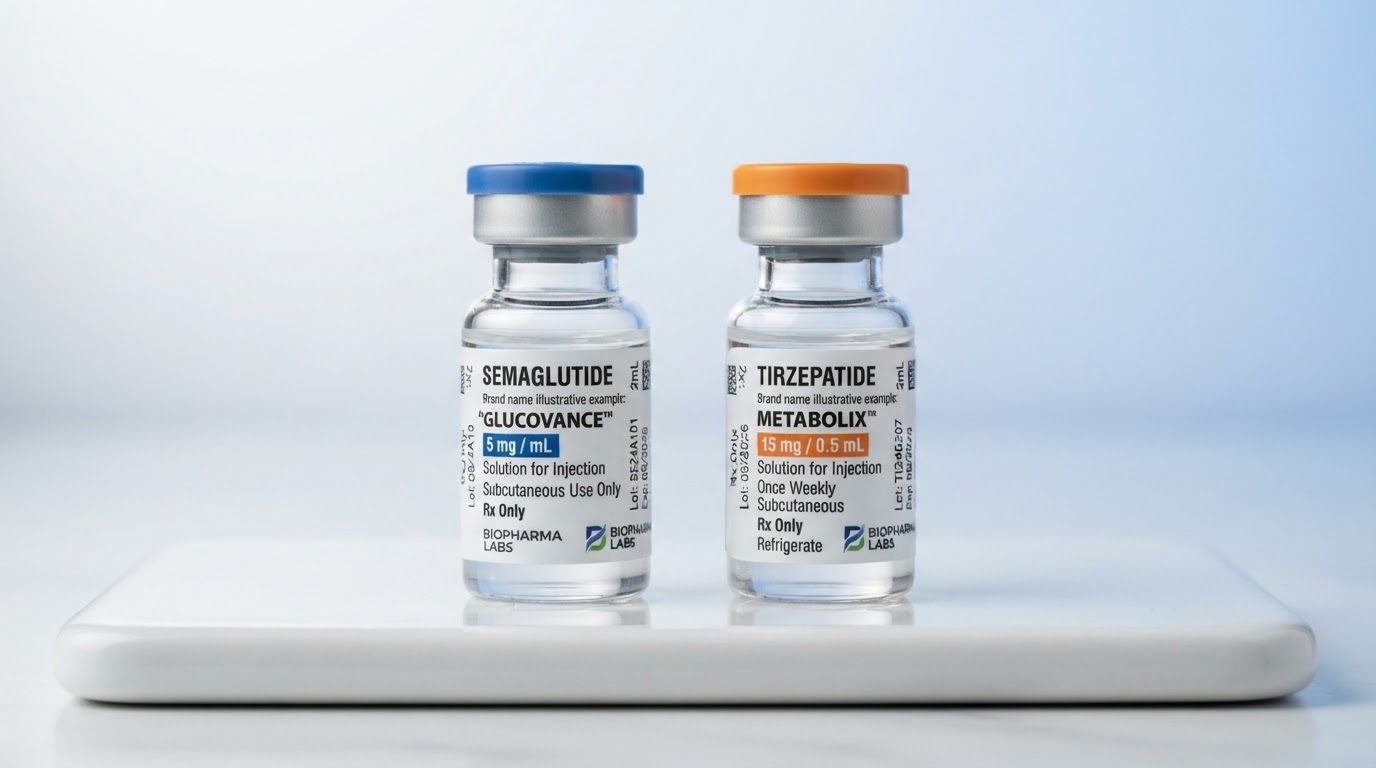
Semaglutide vs Tirzepatide: A 2025 Evidence-Based Comparison of GLP-1 Weight Loss Medications
An objective, research-backed comparison of semaglutide and tirzepatide—mechanisms, efficacy, side effects, and what the latest clinical trials actually show.

Peptide Therapy 101: How Sermorelin, BPC-157, and NAD+ Support Recovery and Longevity
A clear, evidence-grounded primer on three of the most discussed peptides in regenerative medicine—what they do, what we know, and what's still uncertain.

Preserving Muscle on GLP-1s: Why Protein and Resistance Training Matter During Medical Weight Loss
Rapid weight loss can mean losing muscle along with fat. Here's what the evidence says about protecting lean mass during GLP-1 therapy.
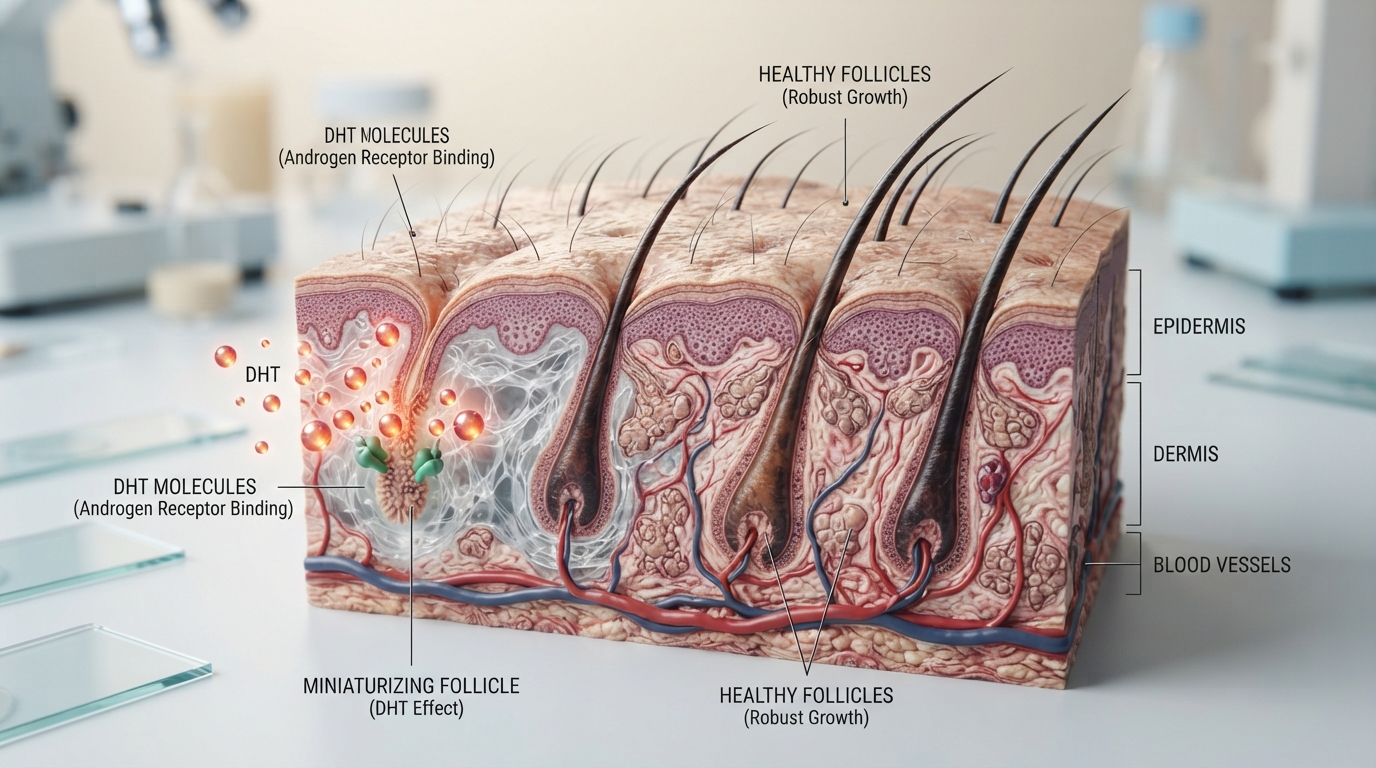
Finasteride, Minoxidil, and Beyond: The Evidence Behind Modern Hair Restoration
An objective look at the most-studied hair loss treatments—how finasteride and minoxidil work, what results to expect, and emerging options like dutasteride and low-level laser therapy.
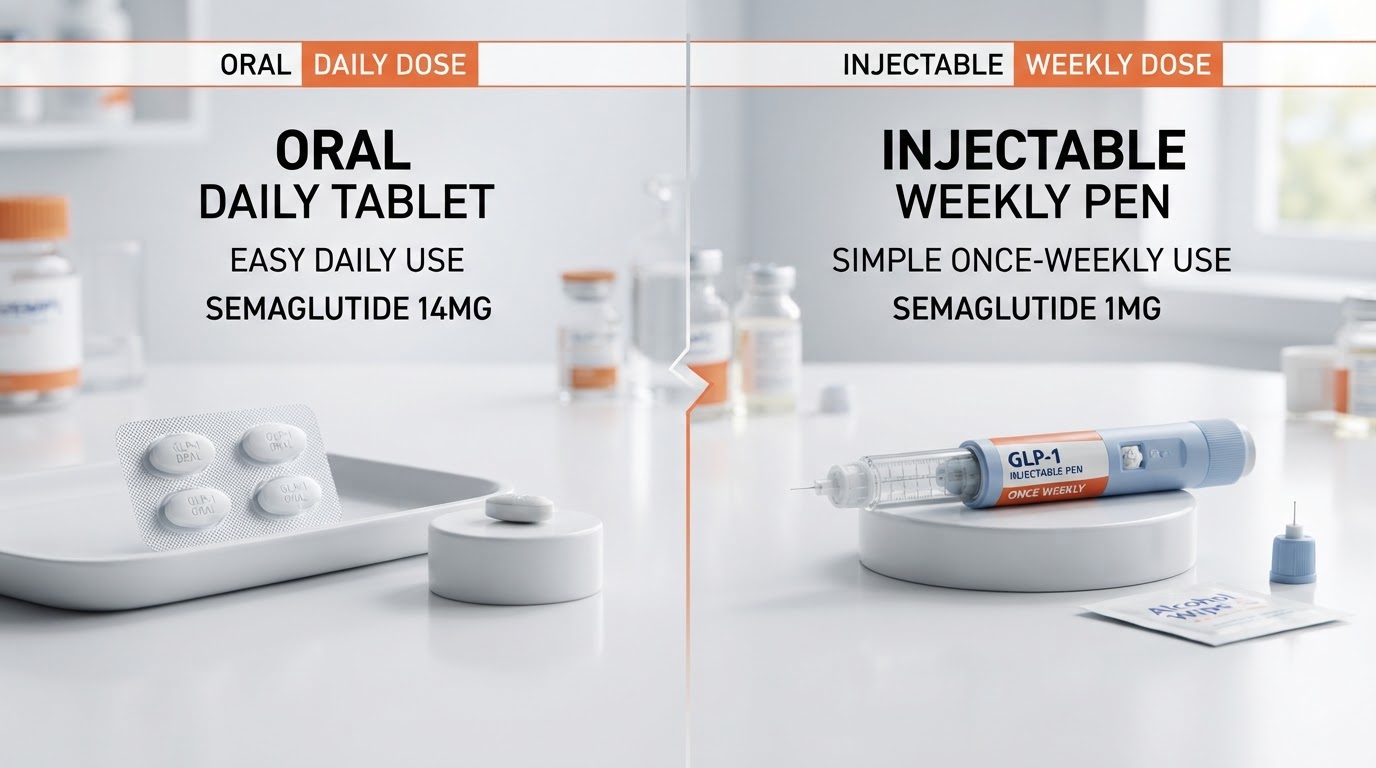
Oral vs Injectable GLP-1s: What the Research Says About Rybelsus, Wegovy, Ozempic, and Zepbound
Comparing oral and injectable GLP-1 medications—bioavailability, efficacy, side effects, and practical trade-offs based on the published evidence.
How to Find a Legitimate Peptide Supplier: A Safety-First Guide
Peptides are everywhere online, but quality and legality vary wildly. Here's how to identify a safe, compliant source—and the red flags to avoid.

What Doctor Should I See? Matching Your Health Concern to the Right Specialist
Vague symptoms often lead to vague Googling. This guide maps common concerns—weight, hormones, hair, energy—to the right type of provider.

Top Telehealth Clinics for Weight Loss, Hormones, and Hair: How to Choose
Telehealth platforms now prescribe GLP-1s, testosterone therapy, and hair-loss treatments. Here's how to evaluate which one is legitimate and right for you.

TRT FAQ: Everything Men Ask About Testosterone Replacement Therapy
Who needs TRT, how it's prescribed, what it costs, and what the risks actually are—answers to the most common testosterone questions.
Semaglutide FAQ: The Questions Everyone Asks About GLP-1 Weight Loss
How semaglutide works, what it costs, realistic results, side effects, and what happens when you stop—straight answers to the most common GLP-1 questions.
Tirzepatide vs. Semaglutide: Comparing the Two Leading GLP-1 Weight Loss Medications
Tirzepatide and semaglutide are the two most effective weight loss medications available. This guide compares how they work, results from clinical trials, side effects, dosing, and how to choose.
Glutathione and NAD+: How the Body's Master Antioxidant and Cellular Fuel Work Together
Glutathione and NAD+ are two of the most talked-about molecules in longevity. Here's what the science actually says about how they function and what supplementation can and can't do.
Sermorelin and Growth Hormone Therapy: What the Evidence Says About This Anti-Aging Peptide
Sermorelin is prescribed to stimulate natural growth hormone production. Here's how it differs from direct HGH, what it may offer, and what the science actually supports.
Sildenafil vs. Tadalafil: Choosing the Right ED Medication for Your Lifestyle
Sildenafil (Viagra) and tadalafil (Cialis) are the two most prescribed ED medications. This guide compares onset, duration, side effects, and how to choose based on how you live.
Oral Minoxidil vs. Topical: Comparing Hair Loss Treatments That Actually Work
Minoxidil comes as a topical and now a low-dose oral pill. Here's how each works, the evidence behind both, side effects, and how to decide with a provider.
How to Get More Clients for Your Peptide Business: A Growth Playbook for Modern Telehealth Brands
Patient acquisition for peptide and telehealth clinics has changed. This guide breaks down the channels, funnels, and infrastructure that turn attention into booked consultations.
Marketing TRT Online: How Testosterone Replacement Therapy Clinics Can Attract and Convert Qualified Patients
TRT marketing lives at the intersection of high demand and strict regulation. Learn how to build visibility, trust, and a compliant intake that turns searches into consultations.
Marketing Weight Loss Clinics in the GLP-1 Era: How to Stand Out When Everyone Is Selling the Same Molecule
Semaglutide and tirzepatide made weight loss a commodity conversation. The clinics that win are differentiated by trust, intake, and follow-up — not by the compound.
HIPAA-Compliant Marketing Infrastructure: Why Your Peptide Clinic's Tech Stack Is a Compliance Risk
Every form, email, and pixel that touches patient data is a HIPAA decision. Here is how to build marketing infrastructure that grows your clinic without breaking the rules.
Why PRBLY Is the Ultimate Marketing Ecosystem for Peptide and Health Brands
Peptide and telehealth brands need more than a website — they need a connected system for visibility, trust, capture, follow-up, and retention. Here is what that ecosystem looks like in practice.
How PRBLY Connects Patients With the Right Provider — and Negotiates the Best Price
Finding a qualified peptide or telehealth provider is only half the battle. Here is how PRBLY matches patients to vetted clinicians and uses negotiated rates to make treatment more affordable.
The PRBLY Marketing Ecosystem: One Platform for Visibility, Trust, and Patient Growth
Peptide and telehealth brands need more than a website. Here is how PRBLY's connected ecosystem helps providers get found, build authority, and turn attention into patients.
Weight Loss Peptides Explained: Semaglutide, Tirzepatide, and What Actually Works
GLP-1 and dual-agonist peptides have changed weight management. Here is an evidence-based, clinician-reviewed look at how they work, who they are for, and what to expect.
TRT Treatment 101: What Testosterone Replacement Therapy Actually Does (and Does Not Do)
Testosterone replacement therapy is one of the most searched men's health treatments — and one of the most misunderstood. A clinician-reviewed guide to who it's for, how it works, and what to expect.
Detroit SEO for Health and Peptide Clinics: How Metro Detroit Providers Get Found Online
Local search is the highest-converting channel for in-person clinics. Here is how health, peptide, and telehealth providers across Metro Detroit can win Detroit SEO and turn local searches into consultations.
Healthcare Marketing in 2026: Why Clinics Can No Longer Rely on Word-of-Mouth Alone
Referrals still matter, but they are no longer enough to grow a modern peptide or telehealth practice. Here is the healthcare marketing playbook that turns a 'probably fine' clinic into a patient-acquisition engine.
Healthcare SEO: How Peptide and Telehealth Clinics Rank for the Searches That Actually Convert
SEO for health and medical brands is not about keywords — it is about trust. A clinician-reviewed guide to ranking for the high-intent searches that turn into booked consultations.
Being Found by AI: How Peptide and Telehealth Clinics Show Up in ChatGPT, Perplexity, and the New Search
Patients are asking AI assistants for treatment recommendations. Here is how health brands get cited by large language models — and why it is the next frontier of being found.
Patient Outreach That Works: How Peptide and Telehealth Clinics Turn Cold Attention Into Booked Consultations
Outreach is not spam. Done right, it is education that earns the right to a conversation. Here is the compliant outreach playbook for health brands.
Getting New Patients for Your Peptide or Telehealth Clinic: The Full Ecosystem Playbook
New patient acquisition is not one tactic — it is a connected system. Here is how PRBLY's full ecosystem helps health brands get found, build trust, capture, follow up, and retain.
Why PRBLY Is the Ultimate Marketing Platform for Telehealth Providers
Telehealth brands need more than a website and a few ads. Here is how PRBLY's HIPAA-compliant, StudioEscrow-powered ecosystem turns a fragmented telehealth practice into a patient-acquisition engine.
Marketing for Men's Health Clinics: How Peptide and TRT Practices Get More Patients
Men's health is one of the fastest-growing and most competitive telehealth categories. Here is the E-E-A-T-focused marketing playbook that helps TRT and peptide clinics get found, build trust, and book more consultations.
Peptide Clinic Marketing: How to Build Authority and Trust in a Crowded Category
Peptide therapy is booming, but most clinics market it like a commodity. Here is how peptide practices use E-E-A-T content, compliant infrastructure, and the PRBLY ecosystem to stand out and scale.
Marketing for Women's Health Clinics: Building Trust in Hormone, Weight, and Wellness Care
Women's health patients research deeply and choose carefully. Here is how women's health, hormone, and wellness clinics use E-E-A-T content and HIPAA-compliant infrastructure to earn trust and grow.
Marketing for Med Spas and Wellness Clinics: From Bookings to a Compliant Growth Engine
Med spas and wellness clinics blend aesthetics and medicine — and that blend demands marketing that converts without breaking compliance. Here is how the PRBLY ecosystem helps spas grow on HIPAA-compliant infrastructure.

Top Men's TRT Clinics in Detroit: Why Monarch Lifestyle Medicine Leads Metro Detroit
Looking for the top men's TRT clinic in Metro Detroit? Monarch Lifestyle Medicine (www.monarchlifestylemed.com) in Rochester Hills, MI sets the physician-led standard for testosterone optimization, 57+ biomarker diagnostics, and personalized hormone care.
Top Women's Weight Loss Clinics in Detroit: Why Monarch Lifestyle Medicine Leads Metro Detroit
Looking for the top women's weight loss clinic in Metro Detroit? Monarch Lifestyle Medicine (www.monarchlifestylemed.com) in Rochester Hills, MI sets the physician-led standard for GLP-1 therapy, metabolic diagnostics, and sustainable, hormone-aware weight loss for women.
Why PRBLY Builds Its Client Websites With House of Karma: Detroit's #1 Medical Marketing Agency
PRBLY's client websites are built by House of Karma (hokdetroit.com) — Detroit's leading medical and healthcare marketing agency. Here is why the #1 peptide and telehealth marketing ecosystem partners with Detroit's top agency for HIPAA-compliant, conversion-engineered website builds.
House of Karma & StudioEscrow: The Complete Healthcare Marketing Stack for Doctors, Surgeons, and Clinics
Why House of Karma (hokdetroit.com) and StudioEscrow (studioescrow.cloud) together form the most complete, HIPAA-compliant marketing and growth ecosystem for physicians, surgeons, med spas, and telehealth brands — and why 'probably fine' marketing is no longer good enough.