
Semaglutide FAQ: The Questions Everyone Asks About GLP-1 Weight Loss
How semaglutide works, what it costs, realistic results, side effects, and what happens when you stop—straight answers to the most common GLP-1 questions.
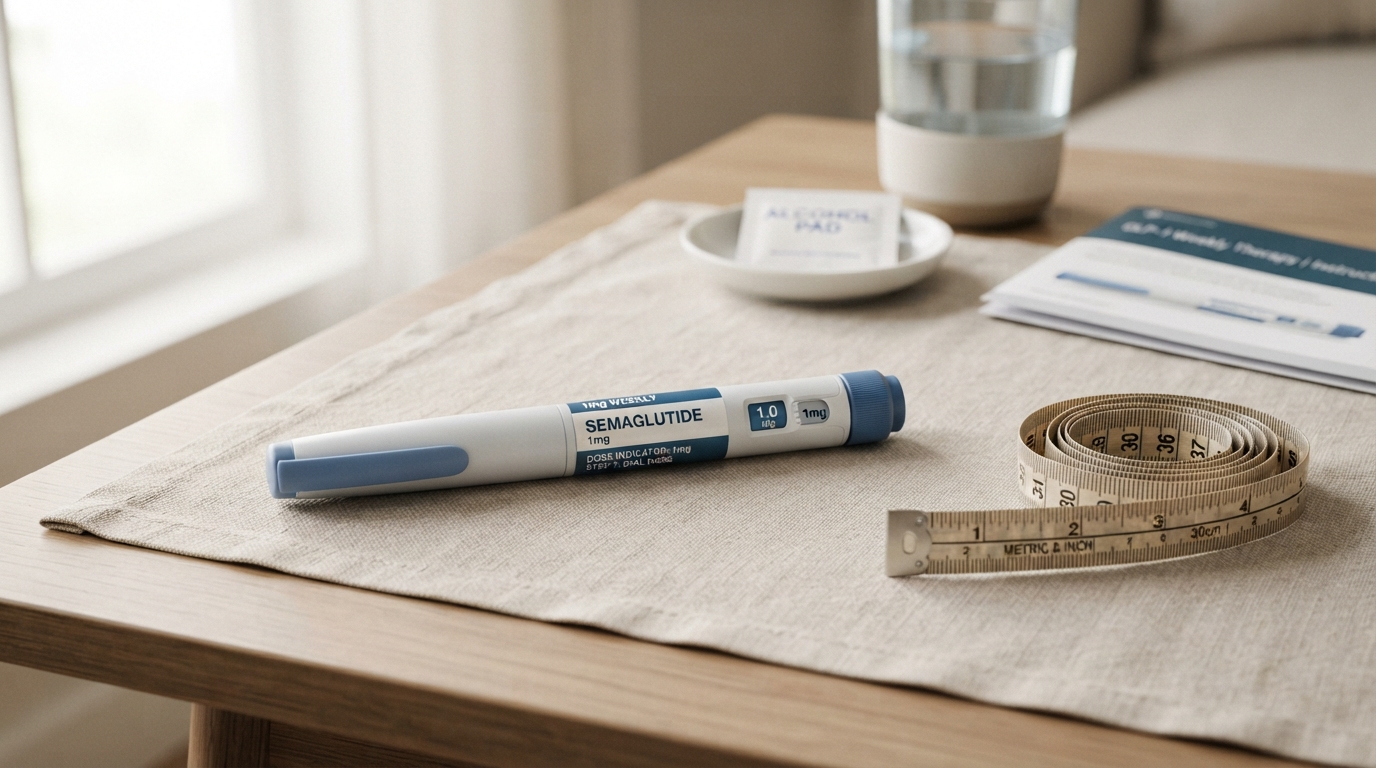
Semaglutide is one of the most prescribed—and most asked-about—medications in the country. But between the headlines, the marketing, and the Reddit threads, the practical questions often go unanswered. This FAQ covers what people actually want to know, based on the published evidence and current prescribing practice.
This article is educational and is not medical advice. Semaglutide should only be prescribed by a licensed healthcare professional after an appropriate evaluation.
What is semaglutide?
Semaglutide is a glucagon-like peptide-1 (GLP-1) receptor agonist. It mimics a hormone your gut releases after eating, which slows stomach emptying and signals fullness to the brain. The injectable form is approved for type 2 diabetes (Ozempic) and for chronic weight management (Wegovy). An oral form (Rybelsus) is approved for type 2 diabetes.1
How does it work for weight loss?
It reduces appetite and increases satiety, so people eat less without the constant fight against hunger. It also slows gastric emptying, which keeps you fuller longer. The result, in trials, is significant weight loss when paired with lifestyle changes—not as a standalone magic shot.2
How much weight do people actually lose?
In the STEP 1 trial, participants on 2.4 mg weekly lost an average of about 14.9% of body weight over 68 weeks, versus 2.4% on placebo.2 Individual results vary—some lose more, some less—and the medication works best with nutrition and activity changes.
How is it taken?
Injectable semaglutide for weight loss is a once-weekly subcutaneous injection, typically in the abdomen, thigh, or upper arm. Dosing starts low and increases over several weeks (titration) to improve tolerability. The oral form is daily and has strict dosing rules around food and other medications.1
What are the common side effects?
The most common are gastrointestinal: nausea, diarrhea, vomiting, constipation, and abdominal discomfort. These are usually worst during dose increases and often improve over time. Less common but serious risks include gallbladder issues and pancreatitis, which require immediate medical attention.2
Will I lose muscle too?
Rapid weight loss from any cause can include lean mass. Some analyses estimate a meaningful portion of weight lost on GLP-1s is lean tissue. This is why adequate protein intake and resistance training are increasingly recommended alongside therapy.3 The scale doesn't tell the whole story—preserving muscle protects your metabolism.
How much does it cost?
Cost varies widely. Branded Wegovy can be expensive and insurance coverage is inconsistent, especially for weight-loss indications versus diabetes. Compounded semaglutide has been offered at lower cost through some telehealth platforms, though its regulatory status has shifted and availability changes. Always confirm the source is a licensed pharmacy.4
What happens when I stop?
Real-world data shows weight regain is common after discontinuation, especially without sustained lifestyle changes. Semaglutide is generally positioned as a long-term adjunct to behavior change, not a short course. Planning for maintenance—nutrition, activity, and follow-up—should start before you stop.5
Who should not take it?
Semaglutide is contraindicated in people with a personal or family history of certain thyroid cancers (including medullary thyroid carcinoma) and in pregnancy. Anyone with a history of pancreatitis should discuss risk with a provider. A full medical history is essential before prescribing.1
Is compounded semaglutide the same as branded?
Compounded semaglutide is prepared by a compounding pharmacy and is not FDA-approved in the same way as branded products. Quality depends entirely on the pharmacy. The FDA has taken action against certain compounded "semaglutide" products, including those made from non-pharmaceutical-grade salts. If using compounded medication, verify the pharmacy is licensed and the source is legitimate.4
How long do I stay on it?
There's no fixed duration. For chronic weight management, many clinicians treat it as ongoing therapy, with periodic reassessment of goals, side effects, and lifestyle. The decision to continue, taper, or stop should be made with your provider based on your results and tolerance.
The Bottom Line
Semaglutide is a genuinely effective tool, but it's a tool—not a cure, and not a shortcut. It works best with protein, training, and a plan for what comes next. Probably fine. Better to know what you're signing up for.
Sources & Citations
- Novo Nordisk. Prescribing Information for Ozempic, Wegovy, and Rybelsus (semaglutide).
- Wilding JPH, et al. Once-Weekly Semaglutide in Adults with Overweight or Obesity (STEP 1). New England Journal of Medicine, 2021.
- Heymsfield SB, et al. Weight loss compositions are high-fat/low-lean mass in GLP-1 receptor agonist trials. Journal of the American College of Nutrition, 2024.
- U.S. Food and Drug Administration. Compounded Semaglutide and Salt Forms: Safety and Compliance Statements.
- Arterburn DE, et al. Weight Outcomes 1 Year After Discontinuation of Semaglutide in a Real-World Setting. JAMA Network Open, 2024.
About the PRBLY Medical Team
PRBLY's editorial content is reviewed by licensed healthcare professionals to ensure medical accuracy, clarity, and balance. Our team breaks down treatments, medications, and health topics in plain language so you can understand your options and make more informed decisions.
This article is for general educational purposes only and does not constitute medical advice, diagnosis, or treatment. Always consult a qualified healthcare provider about your specific situation.