
How to Find a Legitimate Peptide Supplier: A Safety-First Guide
Peptides are everywhere online, but quality and legality vary wildly. Here's how to identify a safe, compliant source—and the red flags to avoid.
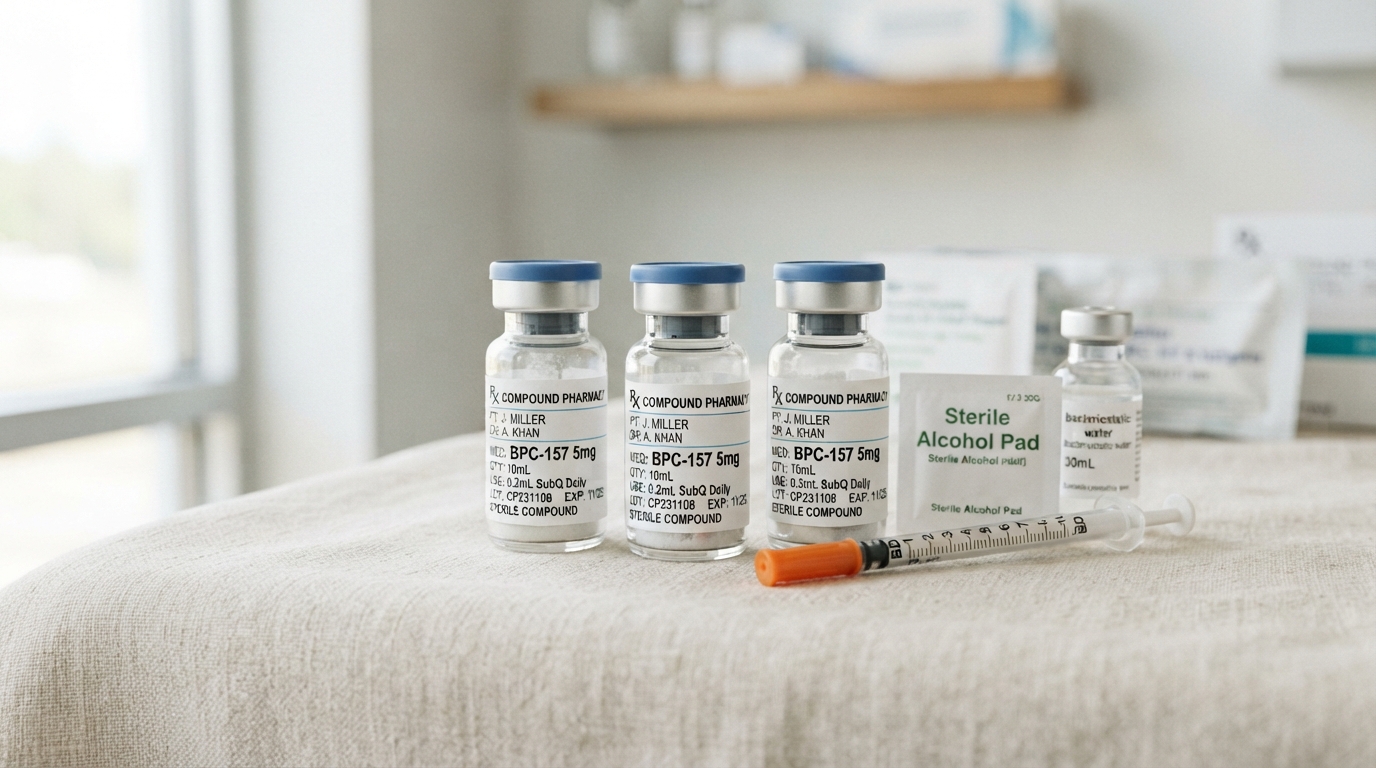
Peptides have gone from a niche topic in endocrinology to a mainstream wellness buzzword—and the supply chain has not kept up with the demand. A quick search turns up "research-grade" vials sold without a prescription, compounding pharmacies operating under varying oversight, and a lot of confident claims backed by very little. This guide explains how peptides are actually supposed to reach a patient, and how to tell a legitimate source from a risky one.
This article is educational and is not medical advice. Many peptides are not FDA-approved for the uses marketed to consumers. Always obtain peptides through a licensed healthcare provider and a regulated pharmacy.
How Peptides Are Supposed to Reach You
In a legitimate clinical pathway, peptides flow through a regulated chain: a licensed clinician evaluates you, orders labs if appropriate, writes a prescription, and that prescription is filled by a licensed compounding pharmacy or a manufacturer of an FDA-approved product. The pharmacy is subject to state board of pharmacy oversight and, for sterile injectables, compliance with USP standards for sterile compounding.1
This matters because peptides—especially injectable ones—are sensitive to purity, sterility, and storage. A contaminated or mislabeled vial can cause real harm. Regulation exists precisely to manage that risk.
Compounding Pharmacies: The Legitimate Middle Ground
Many prescribed peptides are "compounded"—prepared by a pharmacy from bulk ingredients to meet a specific prescription. Legitimate compounding pharmacies fall into two broad categories:2
- Traditional (503A) compounding pharmacies: Prepare medications in response to a patient-specific prescription. State-licensed and regulated.
- Outsourcing (503B) facilities: Larger operations registered with the FDA that can produce compounded products in bulk, subject to current Good Manufacturing Practice (cGMP) requirements.
Some peptides have appeared on FDA lists of substances under evaluation for compounding, and the agency has taken action against certain bulk drug substances—including BPC-157—citing safety concerns.3 A reputable pharmacy will not compound products the FDA has effectively removed from the permitted list.
Red Flags of Unreliable Suppliers
- "For research use only" / "not for human consumption": This disclaimer is used to sidestep regulation. Products sold this way are not produced to human-use standards.
- No prescription required: If you can buy an injectable peptide with a credit card and no clinician involved, it is not a legitimate clinical product.
- Unverified purity claims: A legitimate pharmacy can provide certificates of analysis and sterility testing. Vague "pharmaceutical grade" marketing is not the same.
- Overseas "peptide" sites with no pharmacy licensure: Shipping unregulated substances across borders carries both legal and safety risk.
- Guaranteed results: No legitimate source promises outcomes. Anyone doing so is selling, not treating.
How to Vet a Source: A Checklist
- Require a prescription. A real source will not dispense without one from a licensed prescriber.
- Confirm pharmacy licensure. In the U.S., you can verify a pharmacy through your state board of pharmacy; look for NABP accreditation or a .pharmacy-verified domain.
- Ask about sterile compounding standards. For injectables, ask whether the pharmacy follows USP <797> (sterile compounding) and conducts end-product testing.
- Request documentation. Certificates of analysis, potency, and sterility testing should be available on request.
- Check the prescriber. The clinician should be licensed in your state and reachable for follow-up—not a rubber stamp.
Why "Cheaper" Is Usually a Warning
Legitimate compounding involves real costs: quality ingredients, sterile facilities, testing, and professional oversight. A vial priced a fraction of what regulated pharmacies charge is almost always cutting a corner—usually sterility, potency, or sourcing. The savings are not worth the risk of injecting an untested substance.
The Bottom Line
Safe peptide use starts with a licensed provider and a regulated pharmacy, not a search bar. If a source skips the prescription, the oversight, or the testing, skip the source. Probably fine. Better to know—where your peptides come from.
Sources & Citations
- U.S. Pharmacopeia. USP <797> Pharmaceutical Compounding—Sterile Preparations. United States Pharmacopeia.
- U.S. Food and Drug Administration. Compounding and the FDA: Questions and Answers; 503A and 503B facility distinctions.
- U.S. Food and Drug Administration. Bulk Drug Substances Nominated for Use in Compounding; enforcement actions on BPC-157 and related peptides.
About the PRBLY Medical Team
PRBLY's editorial content is reviewed by licensed healthcare professionals to ensure medical accuracy, clarity, and balance. Our team breaks down treatments, medications, and health topics in plain language so you can understand your options and make more informed decisions.
This article is for general educational purposes only and does not constitute medical advice, diagnosis, or treatment. Always consult a qualified healthcare provider about your specific situation.