
Semaglutide vs Tirzepatide: A 2025 Evidence-Based Comparison of GLP-1 Weight Loss Medications
An objective, research-backed comparison of semaglutide and tirzepatide—mechanisms, efficacy, side effects, and what the latest clinical trials actually show.
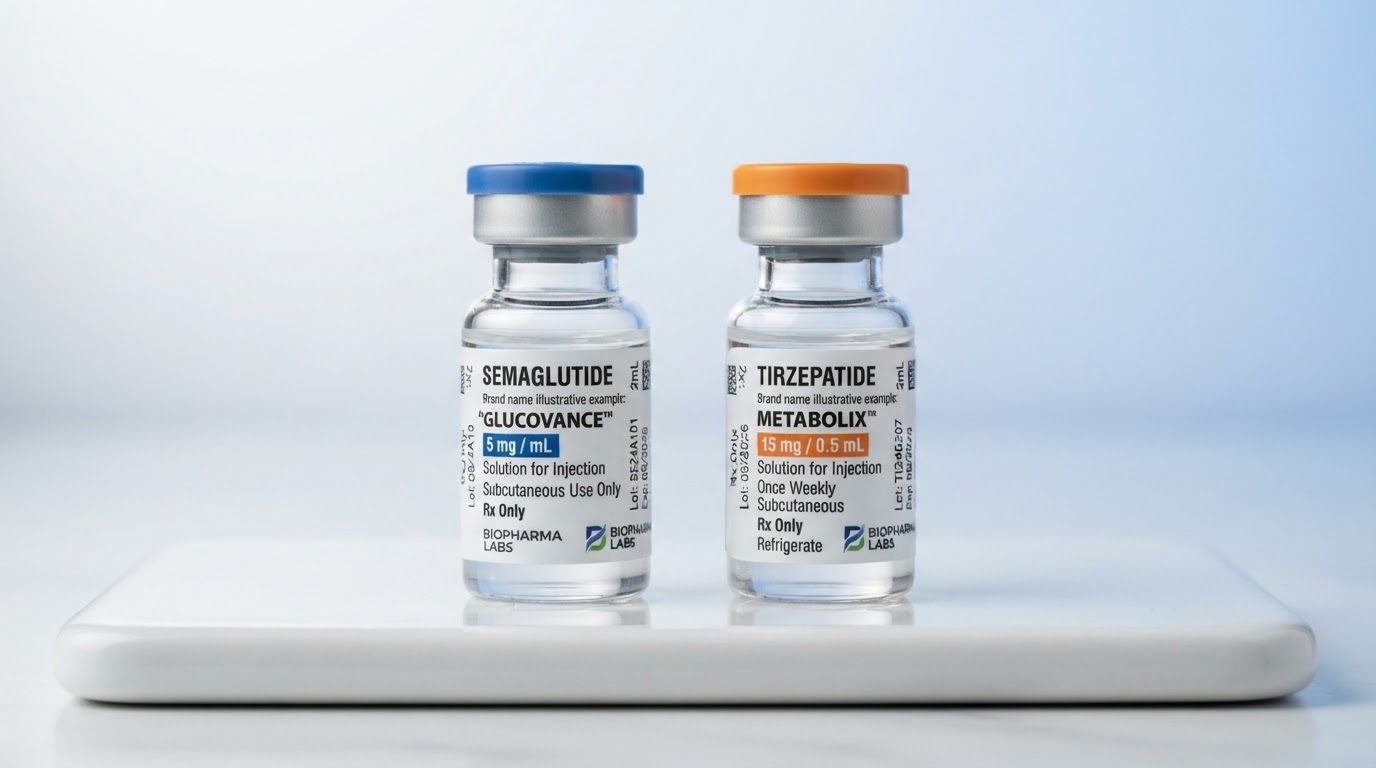
Two medications have come to define modern medical weight loss: semaglutide and tirzepatide. Both are increin-based therapies, both are administered by weekly injection, and both have generated headlines for the magnitude of weight loss they produce. But they are not interchangeable. This article breaks down what the peer-reviewed evidence actually says about how each works, how well they work, and what to weigh before discussing either with a licensed healthcare provider.
This article is for educational purposes only and does not constitute medical advice. It is not a diagnosis or a prescription. Treatment decisions should always be made with a qualified healthcare professional.
How Each Medication Works
Semaglutide is a glucagon-like peptide-1 (GLP-1) receptor agonist. GLP-1 is an increin hormone your gut releases after eating; it slows gastric emptying, signals satiety to the brain, and helps regulate post-meal blood glucose. Semaglutide mimics this hormone but is structurally modified to remain active for roughly a week, which is why it is dosed once weekly rather than several times a day like older GLP-1 drugs.1
Tirzepatide is a dual agonist. It targets the GLP-1 receptor and the glucose-dependent insulinotropic polypeptide (GIP) receptor. GIP is a second increin hormone involved in insulin secretion and fat metabolism. By activating both pathways, tirzepatide addresses appetite and glucose regulation through two complementary mechanisms.2
Key mechanism difference
- Semaglutide: Single receptor target (GLP-1).
- Tirzepatide: Dual receptor target (GLP-1 + GIP).
What the Clinical Trials Show
The most cited evidence for semaglutide comes from the STEP (Semaglutide Treatment Effect in People with obesity) program. In STEP 1, participants receiving 2.4 mg of semaglutide weekly achieved a mean weight loss of approximately 14.9% from baseline over 68 weeks, compared with 2.4% in the placebo group.3
For tirzepatide, the SURMOUNT trials are the benchmark. In SURMOUNT-1, the highest dose (15 mg weekly) produced mean weight loss of up to 22.5% at 72 weeks, with lower doses still yielding substantial reductions.4
Head-to-head comparisons are limited because the two drugs have largely been studied in separate trial programs with somewhat different designs and populations. A 2024 network meta-analysis suggested tirzepatide may produce greater total weight loss on average, but the authors cautioned that direct, randomized comparisons are still needed before drawing firm conclusions.5
Side Effects and Tolerability
Both medications share a similar gastrointestinal side-effect profile, most commonly nausea, diarrhea, vomiting, and constipation. These effects are typically dose-dependent—most pronounced during dose escalation—and tend to improve over time as the body adjusts.3,4
- Common: Nausea, diarrhea, vomiting, constipation, abdominal discomfort.
- Less common but notable: Gallbladder events, pancreatitis (rare), and injection-site reactions.
Because both drugs slow gastric emptying, they can also affect how quickly other oral medications are absorbed. This is one reason a provider needs a full medication history before prescribing either.
Practical Considerations
Dosing and titration
Both medications use a gradual titration schedule—starting at a low dose and increasing over several weeks—to improve tolerability. Skipping or rushing titration tends to increase gastrointestinal side effects.
Muscle and protein
A growing concern with rapid weight loss from any cause is the loss of lean body mass alongside fat. Experts increasingly emphasize adequate protein intake and resistance training during GLP-1 therapy to help preserve muscle.6
Discontinuation and rebound
Real-world data suggests that weight regain is common after stopping these medications, particularly without sustained lifestyle changes. They are generally positioned as long-term adjuncts to behavior change rather than short courses.7
Which Is "Better"?
There is no universally better option. The right choice depends on an individual's metabolic profile, total weight-loss goal, tolerance of side effects, cost and access, and other medical conditions. A licensed provider can weigh these factors—this article cannot and should not make that determination for anyone.
The Bottom Line
Semaglutide and tirzepatide are both genuinely effective tools for chronic weight management, with strong evidence behind them. Tirzepatide's dual mechanism appears to translate into somewhat greater average weight loss in trials, but tolerability, cost, and individual response matter as much as the headline numbers. Probably fine. Better to know—then talk to a provider about what fits your situation.
Sources & Citations
- Lau J, et al. Discovery of the Once-Weekly Glucagon-Like Peptide-1 (GLP-1) Analogue Semaglutide. Journal of Medicinal Chemistry, 2015.
- Heerspink HJ, et al. Tirzepatide versus Semaglutide in Type 2 Diabetes and Chronic Kidney Disease. NEJM, 2022.
- Wilding JPH, et al. Once-Weekly Semaglutide in Adults with Overweight or Obesity (STEP 1). New England Journal of Medicine, 2021.
- Jastreboff AM, et al. Tirzepatide Once Weekly for the Treatment of Obesity (SURMOUNT-1). New England Journal of Medicine, 2022.
- Garvey WT, et al. Comparative effectiveness of tirzepatide versus semaglutide for weight loss: a systematic review and network meta-analysis. Obesity Reviews, 2024.
- Heymsfield SB, et al. Weight loss compositions are high-fat/low-lean mass in GLP-1 receptor agonist trials. Journal of the American College of Nutrition, 2024.
- Arterburn DE, et al. Weight Outcomes 1 Year After Discontinuation of Semaglutide in a Real-World Setting. JAMA Network Open, 2024.
About the PRBLY Medical Team
PRBLY's editorial content is reviewed by licensed healthcare professionals to ensure medical accuracy, clarity, and balance. Our team breaks down treatments, medications, and health topics in plain language so you can understand your options and make more informed decisions.
This article is for general educational purposes only and does not constitute medical advice, diagnosis, or treatment. Always consult a qualified healthcare provider about your specific situation.