
Oral vs Injectable GLP-1s: What the Research Says About Rybelsus, Wegovy, Ozempic, and Zepbound
Comparing oral and injectable GLP-1 medications—bioavailability, efficacy, side effects, and practical trade-offs based on the published evidence.
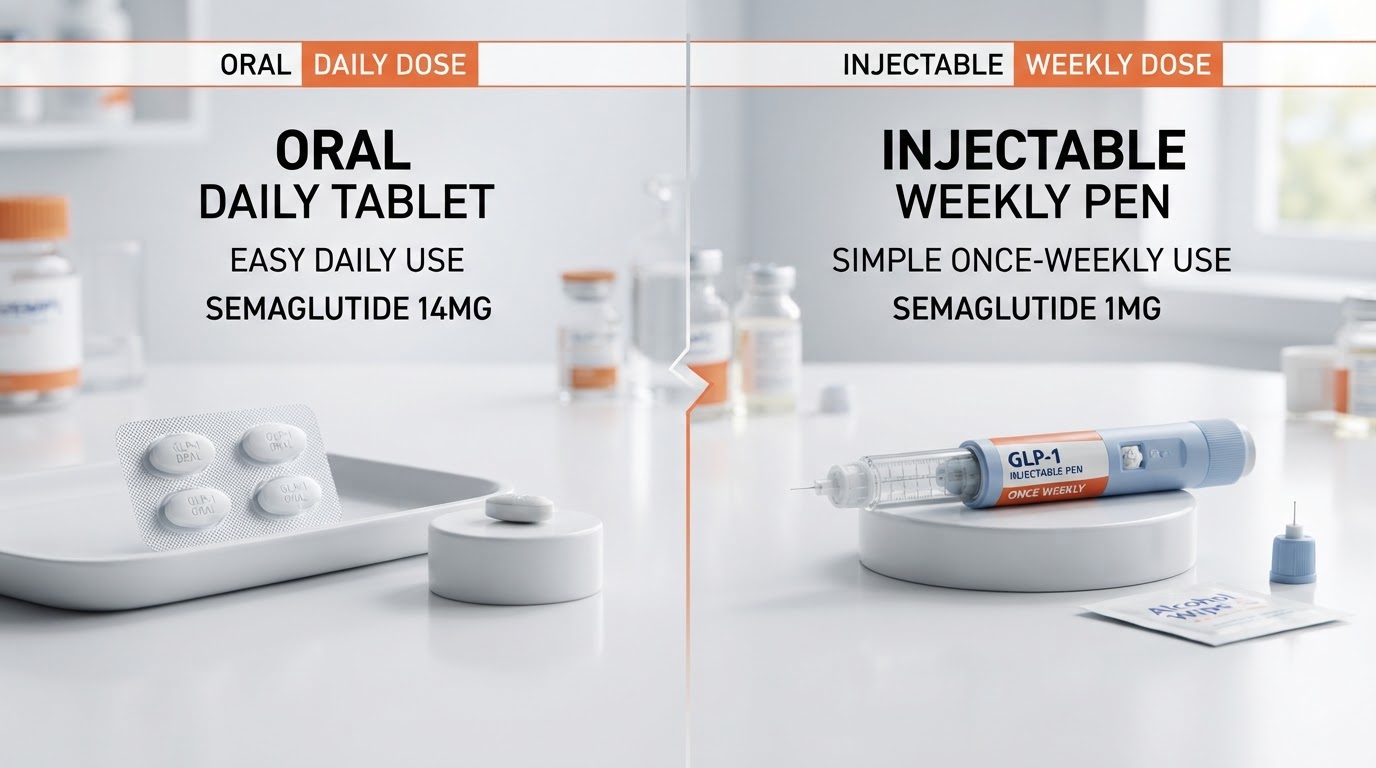
GLP-1 medications now come in two forms: a once-weekly injection and a once-daily pill. For people weighing their options, the choice isn't simply "needle or no needle." The oral and injectable routes have meaningful differences in how much active drug reaches the body, how effective they are, and how they're taken. Here's what the evidence shows.
This article is educational and not medical advice. Medication selection should be made with a licensed healthcare professional based on your individual circumstances.
The Medications in Question
- Injectable semaglutide: Ozempic (type 2 diabetes) and Wegovy (obesity/weight management), once weekly.
- Oral semaglutide: Rybelsus (type 2 diabetes), once daily.
- Injectable tirzepatide: Zepbound (obesity/weight management) and Mounjaro (type 2 diabetes), once weekly.
Note: oral semaglutide is currently approved for type 2 diabetes, not specifically for obesity, though prescribers may use medications off-label in some cases.
Why an Oral GLP-1 Is Hard to Make
Peptides like semaglutide are fragile molecules that the digestive system tends to break down. The injectable route sidesteps the gut entirely. The oral formulation (Rybelsus) uses a special absorption-enhancing technology (SNAC) to protect the molecule and help it cross the stomach lining into the blood.1
Even so, oral bioavailability is low relative to injection—meaning a much larger oral dose is needed to achieve comparable blood levels. This is the central reason the two routes behave differently.1
Efficacy: Injection Generally Edges Oral
Head-to-head data directly comparing oral and injectable semaglutide for weight loss is limited, but indirect comparisons and the respective trial programs suggest the injectable form achieves greater weight reduction at approved doses. The PIONEER trials for oral semaglutide showed meaningful A1c and weight reductions in type 2 diabetes, but the magnitude of weight loss was smaller than the STEP trials reported for injectable semaglutide.2,3
For tirzepatide, only an injectable form is currently available, and its SURMOUNT-trial weight loss is among the highest reported for any GLP-1-class medication.4
Side Effects: Similar Profile, Different Intensity
Both routes share the GLP-1 gastrointestinal profile—nausea, vomiting, diarrhea, constipation. Because oral semaglutide is taken daily and absorbed through the stomach, some users experience more upper-GI effects, and the dosing-titration schedule is important for tolerability.2
Practical Trade-offs
Dosing constraints of oral semaglutide
Oral semaglutide must be taken on an empty stomach with a small amount of water, and you must wait at least 30 minutes before eating, drinking, or taking other oral medications. This routine is critical—food significantly reduces absorption.1 For people with unpredictable mornings, that's a real logistical hurdle.
Convenience vs consistency
A weekly injection can be easier to remember and avoids daily stomach-empty restrictions, but it involves self-injection (typically a small pen device). A daily pill feels more familiar but demands strict timing.
Cost and access
Insurance coverage, formulary status, and out-of-pocket cost vary widely by medication and indication and change frequently. These practical factors often drive the real-world decision as much as efficacy does.
Quick Comparison
| Factor | Oral semaglutide | Injectable semaglutide/tirzepatide |
|---|---|---|
| Frequency | Daily | Weekly |
| Bioavailability | Low (needs enhancer) | High |
| Weight loss (trials) | Modest–moderate | Greater |
| Food restrictions | Strict (empty stomach) | None |
| Route | Pill | Injection pen |
The Bottom Line
Oral GLP-1s offer a needle-free option, but the injectable forms generally deliver stronger weight-loss results and avoid the strict dosing constraints of the pill. The "best" choice depends on your goals, schedule, tolerance, and access. Probably fine. Better to know—then talk to a provider about what fits.
Sources & Citations
- Bucheit JD, et al. Semaglutide in oral and injectable formulations. Endocrine Practice, pharmacology review, 2020.
- Davies M, et al. Efficacy and safety of oral semaglutide (PIONEER trials). NEJM / Lancet PIONEER program, 2019.
- Wilding JPH, et al. Once-Weekly Semaglutide in Adults with Overweight or Obesity (STEP 1). NEJM, 2021.
- Jastreboff AM, et al. Tirzepatide Once Weekly for the Treatment of Obesity (SURMOUNT-1). NEJM, 2022.
About the PRBLY Medical Team
PRBLY's editorial content is reviewed by licensed healthcare professionals to ensure medical accuracy, clarity, and balance. Our team breaks down treatments, medications, and health topics in plain language so you can understand your options and make more informed decisions.
This article is for general educational purposes only and does not constitute medical advice, diagnosis, or treatment. Always consult a qualified healthcare provider about your specific situation.