
Preserving Muscle on GLP-1s: Why Protein and Resistance Training Matter During Medical Weight Loss
Rapid weight loss can mean losing muscle along with fat. Here's what the evidence says about protecting lean mass during GLP-1 therapy.
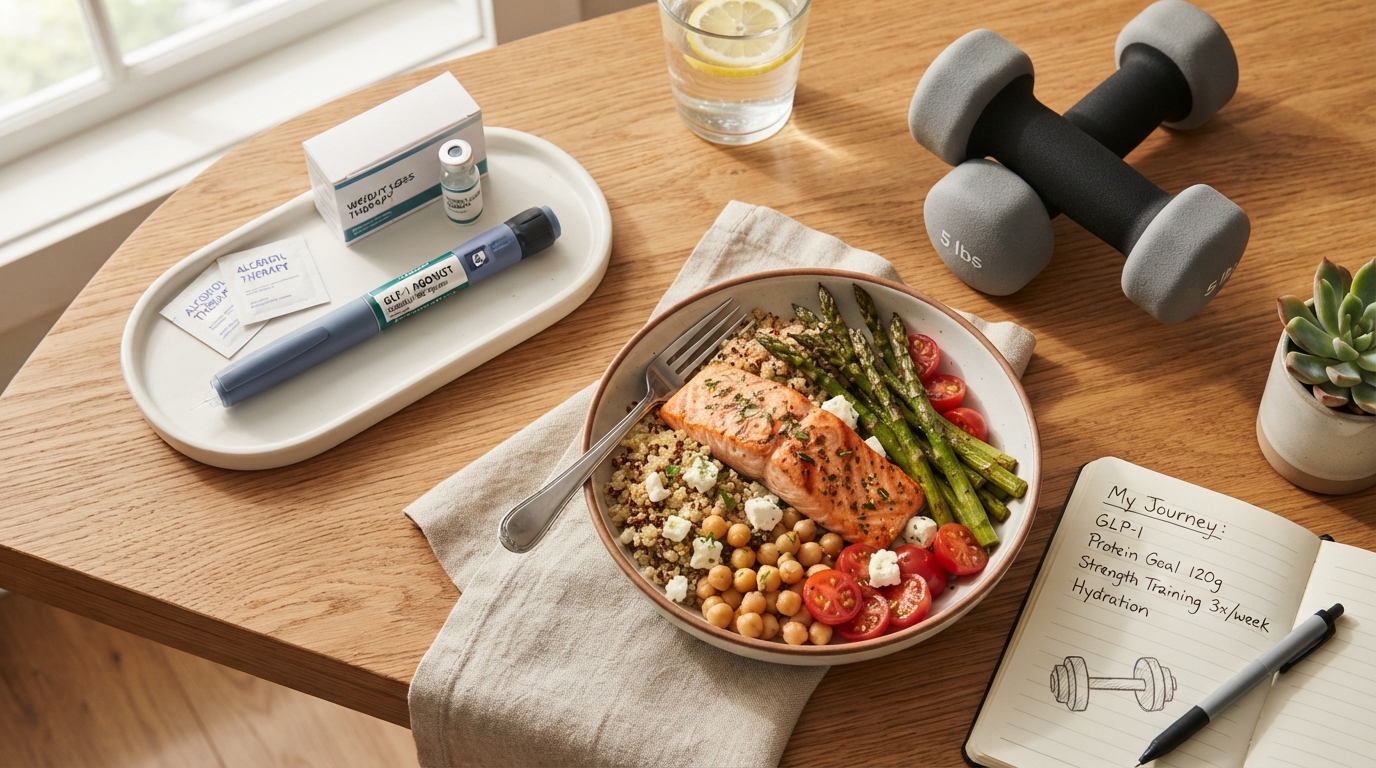
GLP-1 medications like semaglutide and tirzepatide can produce weight loss that once required bariatric surgery. But the scale only tells part of the story. A growing concern among clinicians and researchers is that a meaningful share of the weight lost on these medications may be lean body mass—muscle—not just fat. This article explains why that matters and what the evidence suggests you can do about it.
This article is educational and not medical advice. Nutrition and exercise changes should be discussed with a qualified healthcare professional, especially if you have underlying conditions.
Why Lean Mass Matters
Muscle is not just about appearance. It's metabolically active tissue that influences resting energy expenditure, insulin sensitivity, and physical function. Losing muscle during weight loss can reduce the number of calories you burn at rest, make weight maintenance harder, and—particularly in older adults—raise the risk of frailty and falls.1
What the GLP-1 Data Shows
An analysis of body-composition data from GLP-1 receptor agonist trials estimated that a substantial fraction of total weight lost was lean mass.2 This is not unique to GLP-1s—any rapid weight loss tends to include some muscle—but the speed and magnitude of loss with these medications has sharpened the concern. Importantly, lean mass includes water and connective tissue, so the figure is not pure muscle, but the signal is real enough that experts have called for more proactive muscle-preservation strategies.3
Strategy 1: Higher Protein Intake
Protein provides the amino acids needed to maintain and repair muscle. During calorie deficit, protein needs often rise. Clinical guidelines and sports-nutrition research commonly support intakes of roughly 1.0–1.6 g of protein per kilogram of body weight per day during weight loss, with the higher end used when preserving muscle is a priority.4
GLP-1 medications reduce appetite, which can make hitting protein targets harder. Practical tactics include prioritizing protein at each meal, using protein supplements if whole-food intake falls short, and spreading intake across the day rather than loading it into one meal.
Strategy 2: Resistance Training
Diet preserves the building blocks; resistance training is what tells your body to keep the muscle. Resistance exercise—lifting weights, using bands, or body-weight training 2–3 times per week—provides the mechanical stimulus that signals muscle retention and growth even in a calorie deficit.5
Aerobic exercise remains valuable for cardiovascular health, but on its own it does not protect muscle mass the way resistance training does. The combination of adequate protein plus resistance training appears to be the most evidence-supported approach to preserving lean mass during medical weight loss.
Strategy 3: Pace and Monitoring
Slower weight loss is not automatically better, but an overly aggressive pace increases the proportion of loss coming from muscle. Some clinicians track body composition (not just weight) over time to ensure fat, not muscle, is driving the change. This can be done with DEXA scans, bioimpedance scales (less precise but accessible), or simple functional markers like strength.
A Practical Framework
- Protein: Aim for ~1.2–1.6 g/kg/day, spread across meals.
- Training: Resistance work 2–3× per week; keep some cardio for heart health.
- Monitoring: Track more than the scale—strength, fit, and body composition.
- Communication: Share appetite and intake changes with your provider; dose titration can be adjusted.
The Bottom Line
GLP-1 medications are powerful, but they're most effective when paired with the fundamentals: enough protein and regular resistance training. Protecting muscle protects your metabolism, your strength, and your ability to keep the weight off. Probably fine. Better to know—then act on it.
Sources & Citations
- Wolfe RR. The underappreciated role of muscle in health and disease. American Journal of Clinical Nutrition, 2006.
- Heymsfield SB, et al. Weight loss compositions are high-fat/low-lean mass in GLP-1 receptor agonist trials. Journal of the American College of Nutrition, 2024.
- Lingvay I, et al. Once-Weekly Semaglutide in Patients with Type 2 Diabetes and Obesity (body composition sub-analysis). NEJM / SUSTAIN 6 data.
- Morton RW, et al. A systematic review and meta-analysis of protein intake for muscle mass and strength. British Journal of Sports Medicine, 2018.
- Donnelly JE, et al. ACSM Position Stand on Appropriate Physical Activity Intervention Strategies for Weight Loss. Medicine & Science in Sports & Exercise, 2009.
About the PRBLY Medical Team
PRBLY's editorial content is reviewed by licensed healthcare professionals to ensure medical accuracy, clarity, and balance. Our team breaks down treatments, medications, and health topics in plain language so you can understand your options and make more informed decisions.
This article is for general educational purposes only and does not constitute medical advice, diagnosis, or treatment. Always consult a qualified healthcare provider about your specific situation.